Set Up Rental Deposits Legally Secure: 3 Ways for Landlords
A rental deposit is an important safeguard for landlords, but only if it is stored and managed in legal compliance. Section 551 BGB sets clear requirements: if the deposit is not separated and documented correctly, this can become costly for landlords.
Overview: Key Facts at a Glance
- A rental deposit is legally secure only if it is insolvency-protected, separated from private assets, and clearly documented (Section 551 BGB).
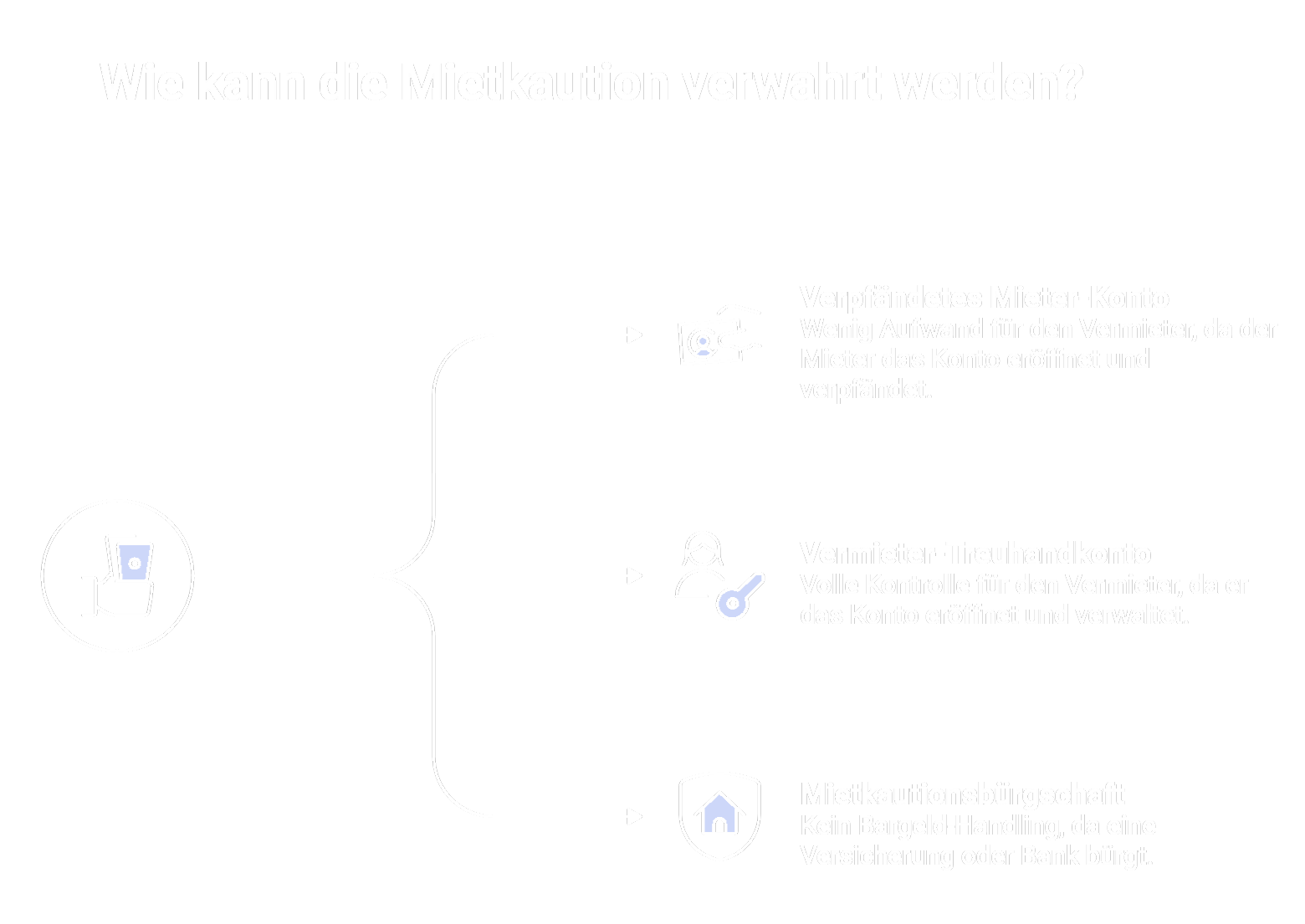
- Landlords usually have three options: pledged tenant account, landlord trust account, or rental deposit guarantee.
- The deposit must never be held in a private current account, not even temporarily.
- Tenants are entitled to proof of proper deposit placement; without proof, they may withhold further deposit installments.
- Interest belongs to the tenant and must be documented and considered at move-out.
- Missing trust designation, missing tax ID, or unclear account handling are common legal mistakes.
- Administrative effort differs by model: guarantees are convenient, trust accounts provide maximum control, and digital solutions combine both.
The 3 Ways to Manage a Rental Deposit
In practice, landlords have three main ways to hold or secure the deposit.
- Pledged tenant account (low effort): The tenant opens an account or savings book and pledges it to the landlord.
- Landlord trust account (full control): The landlord opens a separate account with trust designation.
- Rental deposit guarantee (no cash handling): An insurer or bank guarantees payment instead of cash deposit.
- Alternative forms such as fixed-term deposits or pledged securities depots are possible but must be explicitly agreed and are less common.



A rental deposit is legally secure when it is insolvency-protected, separated from landlord assets, invested under standard conditions, and documented transparently.
Which Option Fits You?
This mainly depends on how much effort you want to invest and how much control you need.
| Model | Account Control | Your Effort | Security |
|---|---|---|---|
| Landlord trust account | Landlord | Digital: low / Traditional: high | High (direct access) |
| Tenant account (pledged) | Tenant | Medium (review and filing) | Medium (access via pledge) |
| Rental deposit guarantee | Insurer/Bank | Low (document filing only) | Indirect (guarantor pays first) |
Good to Know: Costs and Documentation
- Bank fees: Traditional banks often charge for trust accounts (sometimes up to EUR 75).
- Guarantee costs: Usually paid by the tenant as an annual premium.
- Documentation: With classic trust accounts, landlords typically handle annual interest statements manually.
Legally Secure Process: Step by Step
- Select the model and define it in the tenancy agreement.
- Receive funds and immediately separate them from private assets.
- Store tenant tax ID so tax handling and statements are correct.
- Provide written proof to the tenant that the deposit is insolvency-protected.

Checklist and Typical Mistakes
These mistakes can become expensive:
- Deposit held in private account: not insolvency-protected.
- Missing trust designation: account may not qualify as trust account.
- No proof provided: tenant may withhold further installments.
- Missing tenant tax ID: incorrect tax treatment or missing statement.
- Interest documentation not forwarded: breach of information duties.
Checklist: Legal-compliant rental deposit setup
- Is the account clearly marked as trust account or pledged account?
- Was the tenant tax ID provided to the bank?
- Did the tenant receive written proof of the setup?
Good to Know: Segregation Right in Tenant Insolvency
In tenant insolvency proceedings, landlords generally have a segregation right to the deposit. This means the deposit does not flow into the general insolvency estate first, but primarily secures legitimate landlord claims.
Frequently Asked Questions

Published on 06 February 2026Last updated on 30 June 2026