How Rental Security Deposit Accounts Work
What is a rental security deposit account?
A rental security deposit account is a special account where a tenant's rental deposit is securely held. The landlord cannot use this money for personal purposes. It is kept separate from their own money, stored securely and earns interest. This is required by law (§ 551 BGB).
Why do rental security deposit accounts exist?
Landlords have security in case the tenant doesn't pay or causes damage
The law requires that the deposit be kept separate from the landlord's money
Tenants know their money is safe and they receive the interest
How does a rental security deposit account work?
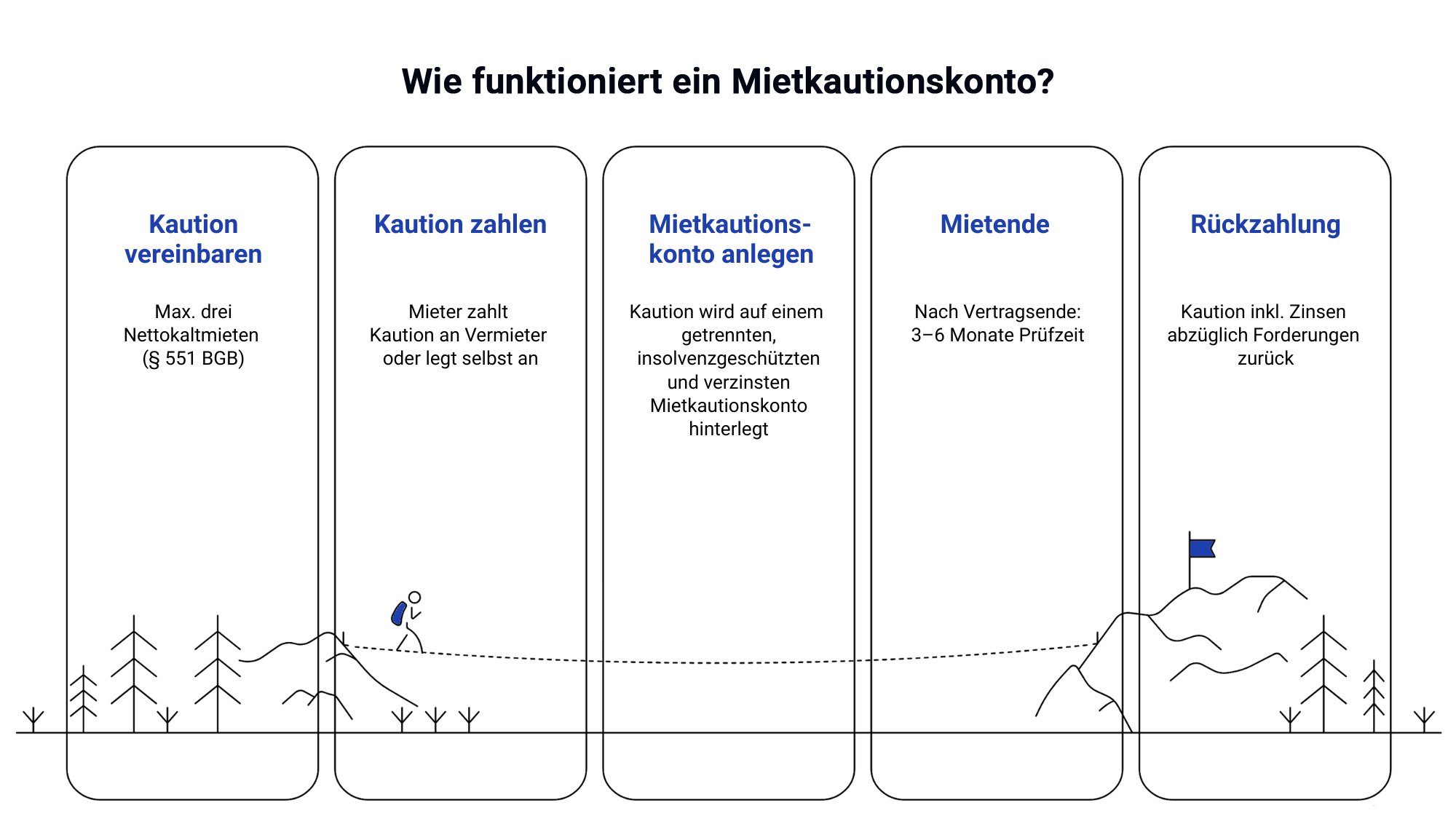
- 1.The tenant pays the deposit (max. three net cold rents, § 551 BGB) usually to the landlord, but can also invest it themselves by agreement.
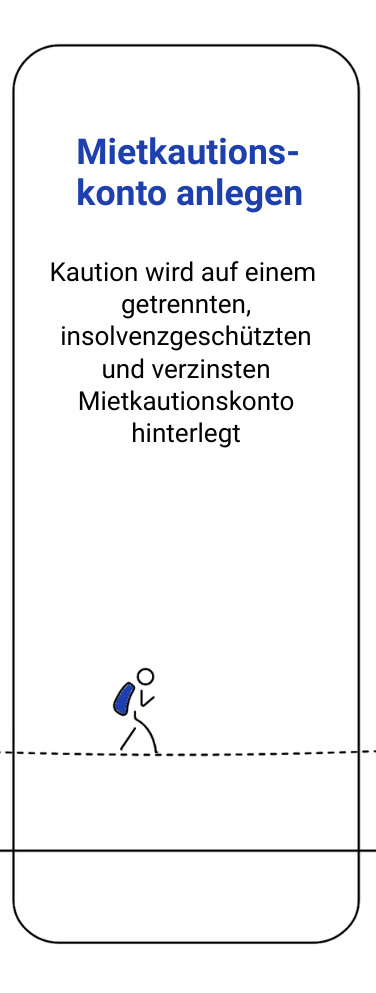
- 2.The landlord must invest the deposit separately from their assets, protected from insolvency and earning interest.
- 3.After the end of tenancy, the deposit must be returned to the tenant after an appropriate review period (usually 3-6 months after the end of tenancy), minus any legitimate claims (e.g. utility costs or damages).




A practical example:
Fabian moves into a new apartment that costs €500 net cold rent. His landlord Wolfgang requires a deposit of €1,500, which is three monthly rents (the legal maximum according to § 551 BGB).
Wolfgang opens a separate rental deposit account with heykaution for his tenant. This account is legally separate from the landlord's assets.
Fabian transfers the €1,500 directly to this account. The money is securely managed there and earns interest. After the end of the tenancy, Fabian receives his deposit including interest back, minus any legitimate claims (e.g. utility costs or damages).
This is how a rental security deposit account can work. Open your deposit account with heykaution in just a few minutes, free of charge and legally secure.
Advantages of a rental security deposit account
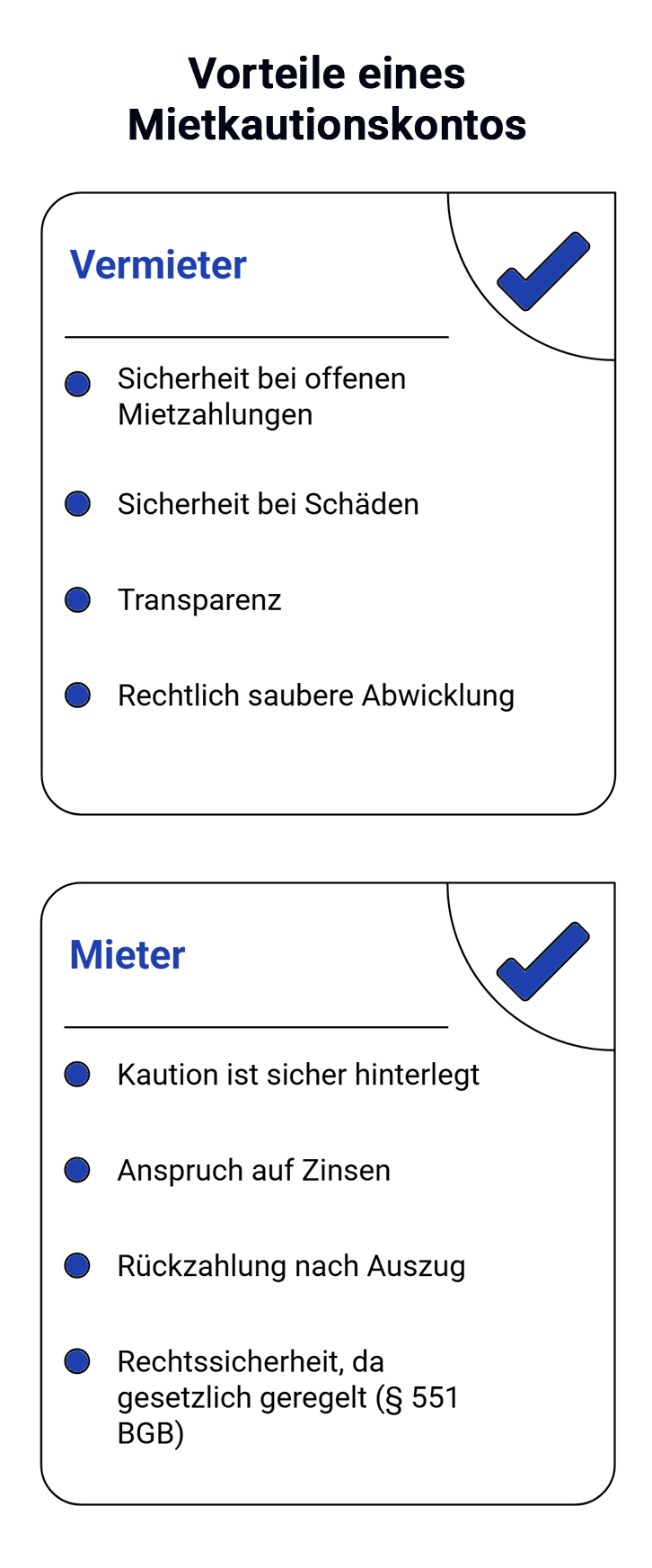
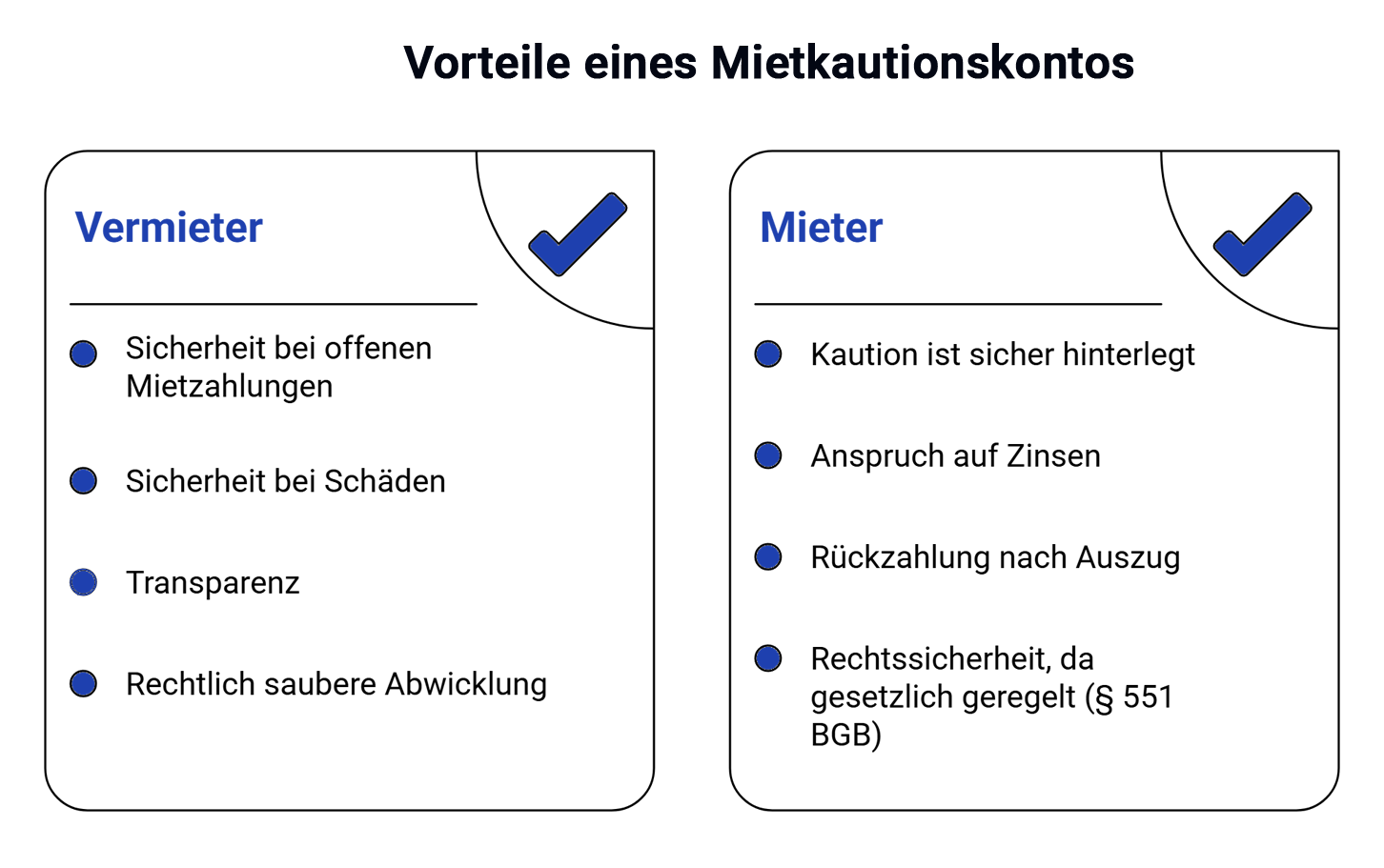
For Landlords
- • Security in case of outstanding rent payments or damages
- • Transparency and legally compliant handling
For Tenants
- • Protection because the deposit cannot simply be spent
- • Entitlement to interest
- • Refund after moving out if no claims are outstanding
Legal Framework for a Security Deposit Account
- Maximum of three net cold rents (§ 551 BGB)
- Account must be kept separate from the landlord's money
- Interest obligation at the local customary interest rate
- Repayment usually within 3–6 months after moving out
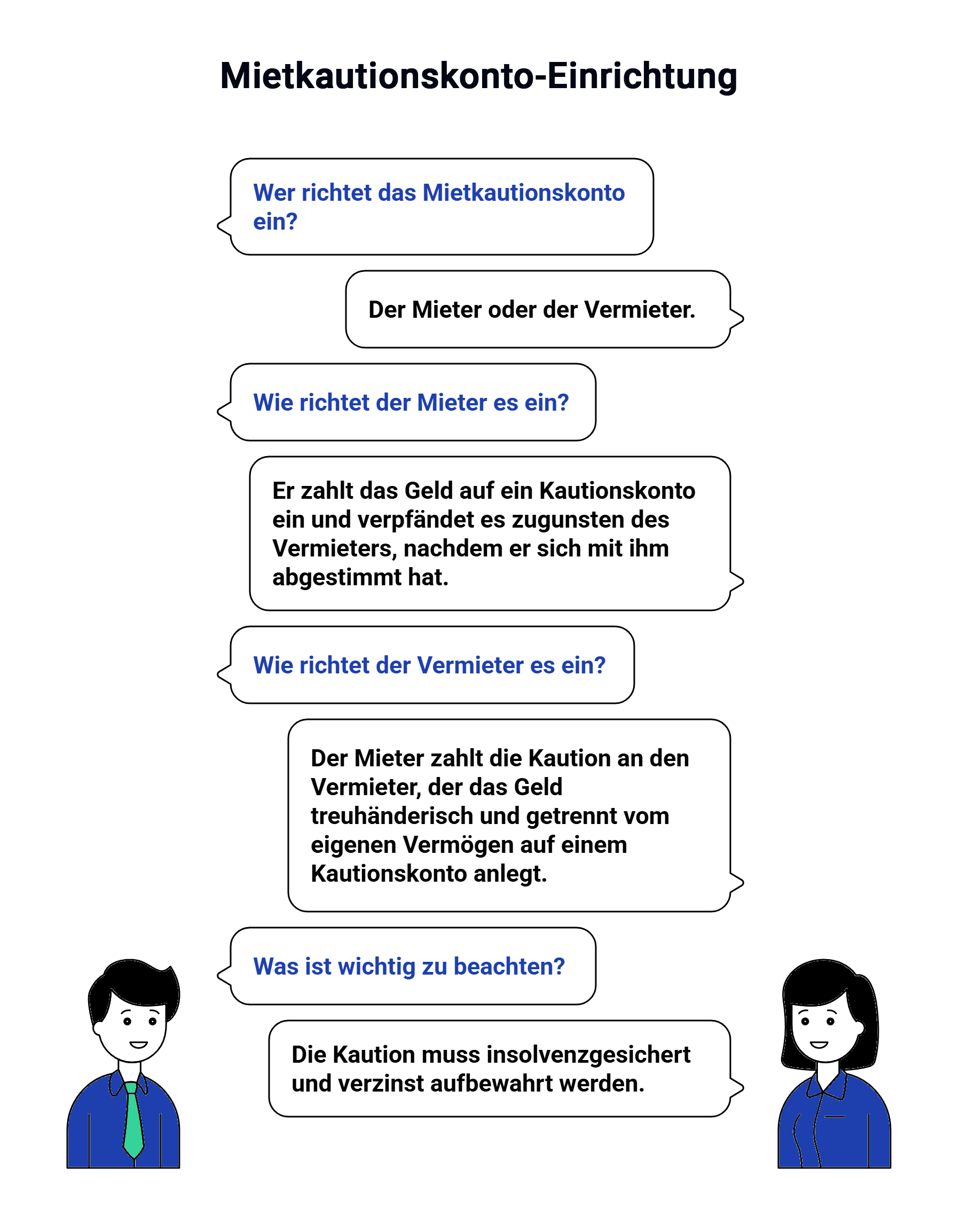
Who sets up the rental security deposit account?
A rental security deposit account can basically be opened in two ways:
By the tenant:
The tenant can deposit the money into a security deposit account themselves and then pledge it in favor of the landlord. It is important that this is agreed with the landlord beforehand. Without consent, the security deposit account is not legally valid.
By the landlord:
If no agreement is reached or the tenant does not want to open their own account, the landlord can set up the rental security deposit account. In this case, the tenant pays the deposit to the landlord, who invests the money in trust and separately from their own assets in a security deposit account (e.g. with heykaution).
Important: In both cases, the deposit must be kept insolvency-protected and interest-bearing – this is explicitly required by § 551 BGB.
How heykaution simplifies the cash deposit topic
With heykaution, the classic cash deposit is transferred into a modern, digital system.
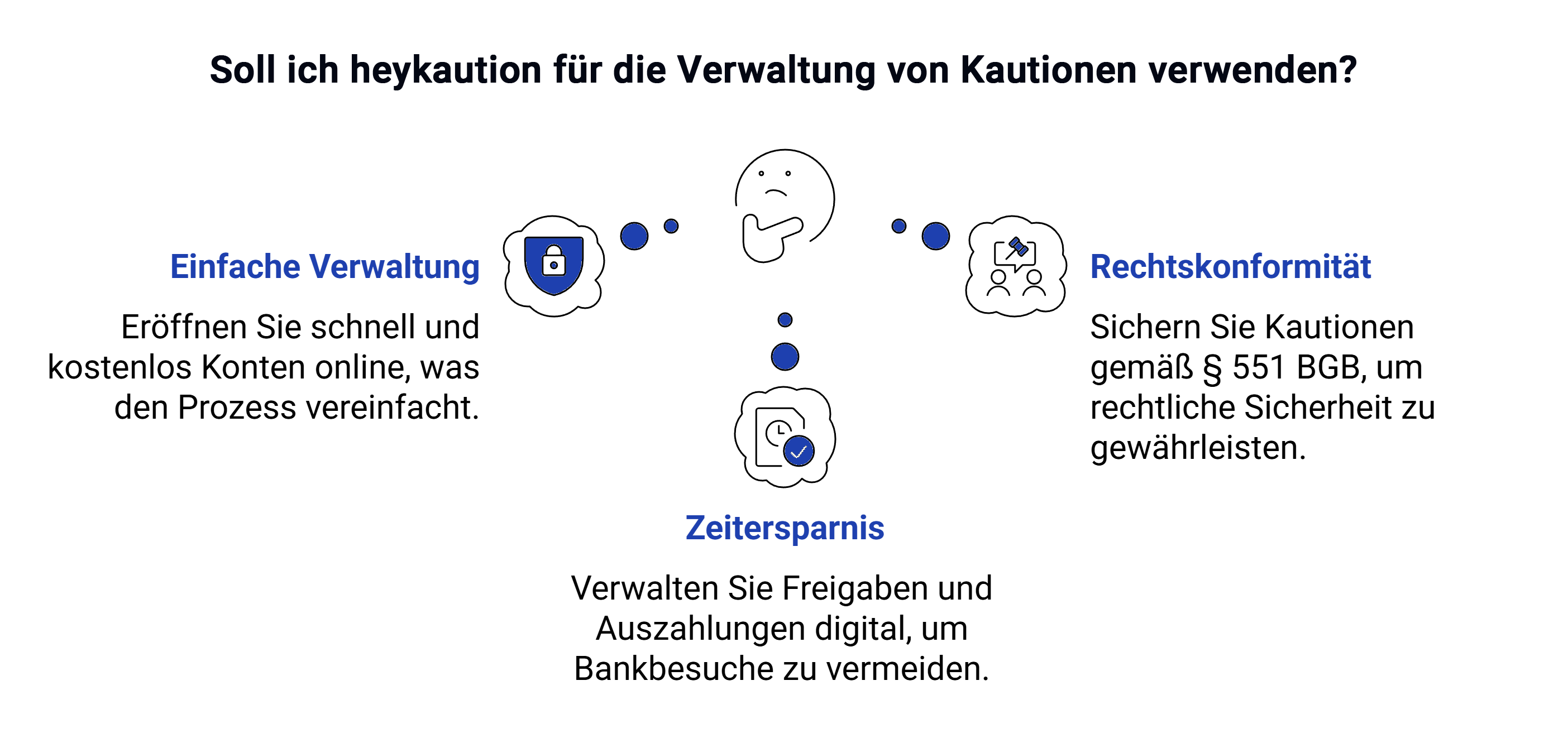
Easy management:
Quickly open a separate deposit account for each apartment – free and online.
Legally compliant and secure:
Automatically separate investment of deposits according to § 551 BGB, securely stored at Volksbank.
Save time:
Handle releases and payouts conveniently digitally, without bank appointments or paperwork.
This saves both parties time, effort and avoids typical sources of error.
Start now with heykaution and replace the traditional cash deposit with a simple, digital solution.
Frequently Asked Questions about Rental Security Deposit Accounts

Published on 15 September 2025Last updated on 30 June 2026