Interest on Rental Security Deposit Accounts
When it comes to rental deposits, it's not just about the right amount or a separate account, but also about the interest. This is precisely where most errors occur in practice.
Landlords who don't know who is entitled to the interest and how it must be managed correctly risk unnecessary refund claims and disputes at the end of the tenancy.
This overview shows which obligations apply and what you need to consider regarding deposit interest.
Key Facts About Interest on Rental Security Deposit Accounts – At a Glance
- The interest from the rental deposit always belongs to the tenant, regardless of who opens or manages the account.
- Landlords may not withhold deposit interest and must pay it out together with the deposit at the end of the tenancy.
- The rental deposit must be kept separate from the landlord's private assets; joint account management is legally inadmissible.
- There is no legally prescribed minimum interest rate, but the investment must be appropriate and market-standard.
- Interest from the rental deposit account is taxable to the tenant and does not have to be taxed by the landlord.
- When making repayments, only legally permissible claims may be deducted from the deposit, not from the interest.
- Errors in the investment, documentation, or repayment of interest frequently lead to disputes, even over small amounts.
Why Interest on Rental Security Deposit Accounts Is Relevant for Landlords
Even though interest yields are currently low, they are legally an integral part of the rental deposit. They are subject to clear legal rules and are not negotiable. Anyone who works imprecisely here risks refund claims, unnecessary discussions and, in case of doubt, legal disputes. Correct management not only saves time, but also protects against avoidable trouble.
In addition to legal questions, the costs of account management also play a role, which can differ significantly depending on the provider – you can find an overview of this in the article <link>What does a rental security deposit account cost?</link>.
Many private landlords assume that a few euros of interest don't matter. Tenants often see it differently, especially when the tenancy has ended on strained terms. This is precisely the moment when every formal error becomes relevant.
Anyone who doesn't properly disclose interest or simply forgets it during repayment provides unnecessary grounds for attack. Even if it's only about small amounts in the end, this quickly becomes a matter of principle. Legally, the situation is clear; emotionally, it usually isn't. That's why it's worth acting correctly and transparently from the start.
In practice, conflicts about rental deposits almost never arise because of the amount, but because of the accounting.
Who is entitled to the interest from the rental deposit?
The legal situation is clear.
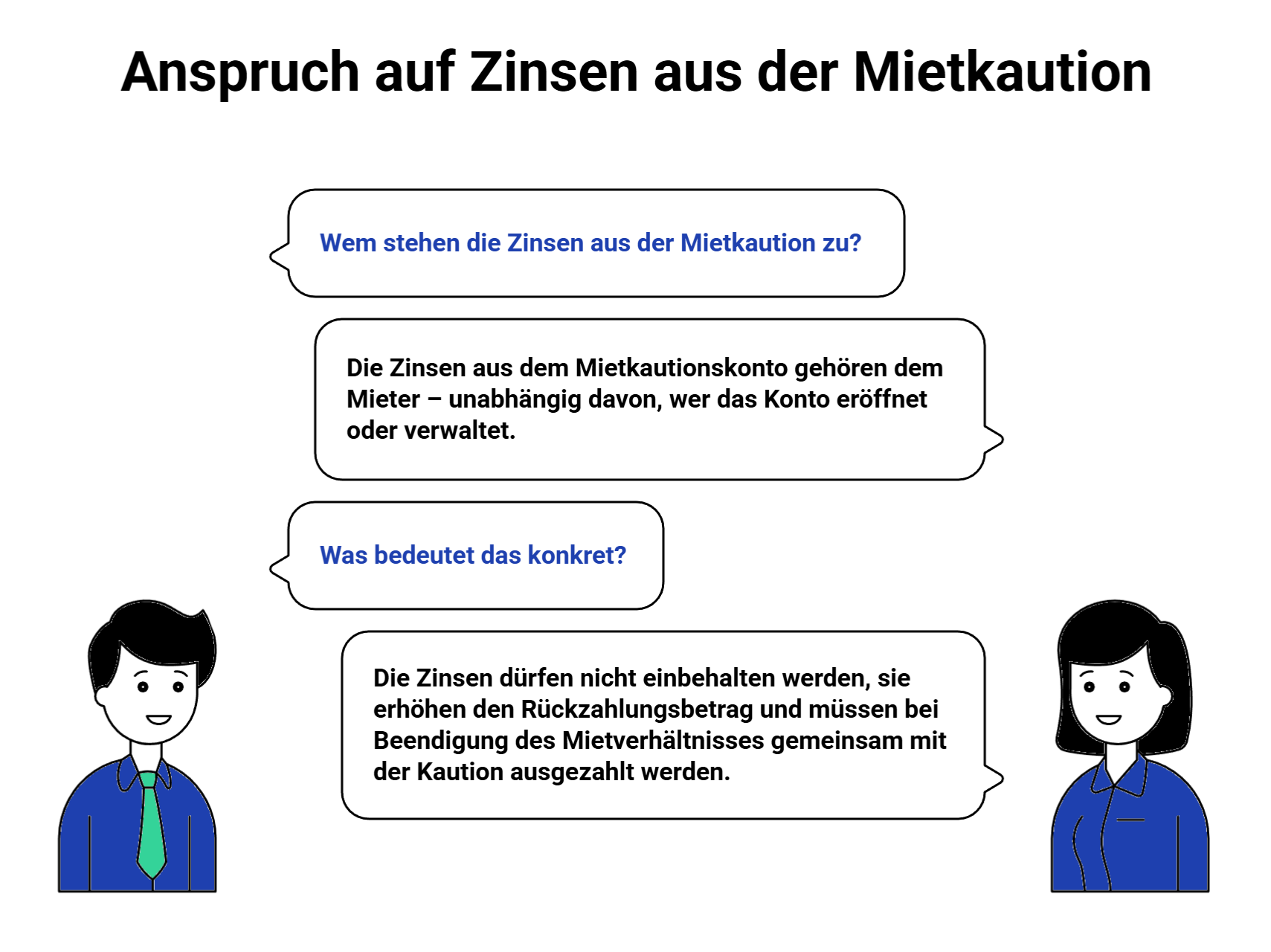
The interest from the rental deposit account belongs to the tenant – regardless of who opens or manages the account.
Specifically, this means: The interest may not be withheld, it increases the repayment amount and must be paid out together with the deposit at the end of the tenancy.

What obligations do you have as a private landlord regarding interest?
Even though the law does not prescribe a fixed interest rate, there are clear requirements for the interest on rental deposits. What matters is not the return, but the manner of management.
- The rental deposit must be kept separate from your private assets. Joint account management is not legally permissible, even if it seems practical in everyday life.
- The investment should be based on safe and market-standard forms, such as those common with traditional savings accounts. Experiments or special solutions are out of place here.
- Your tenant has the right for the deposit to be managed in a transparent manner. This also includes that interest yields are clearly stated and can be explained if necessary.
Especially for private landlords, it makes sense to rely on a solution that automatically fulfills these points and provides legal security, rather than only dealing with detailed questions at the end of the tenancy.
How high is the interest in practice?
Depending on the provider, interest rates are currently mostly in the very low range. You can find a current overview of market-standard conditions and providers in our <link>Rental Security Deposit Account Comparison 2026</link>.
However, this is secondary for you as a landlord. What matters is that the investment is made correctly and complies with legal requirements, not the maximum return.
Do you as a landlord have to pay tax on the interest?
No. The interest from the rental deposit account is considered taxable income of the tenant. You do not have to pay tax on these amounts or declare them in your own tax return. This significantly reduces administrative effort and makes deposit management uncomplicated from a tax perspective as well.
What happens to the interest after the end of the tenancy?
After the end of the tenancy, for many landlords it's less about the amount of the deposit than about proper settlement. This is precisely where it becomes clear whether deposit management was transparent or not.
First, outstanding claims should be checked, such as from utility bills or demonstrable damage to the apartment. Only amounts that are legally permissible and specifically justified may be deducted. Subsequently, the remaining deposit must be returned to the tenant together with the accrued interest.
It is important that the interest may not be treated separately. It is part of the deposit and automatically increases the repayment amount.
Typical Mistakes by Private Landlords in Dealing with Deposit Interest
In practice, problems rarely arise from individual major errors, but from small oversights that drag on for years. This is particularly evident in the form of investment, documentation, and repayment.
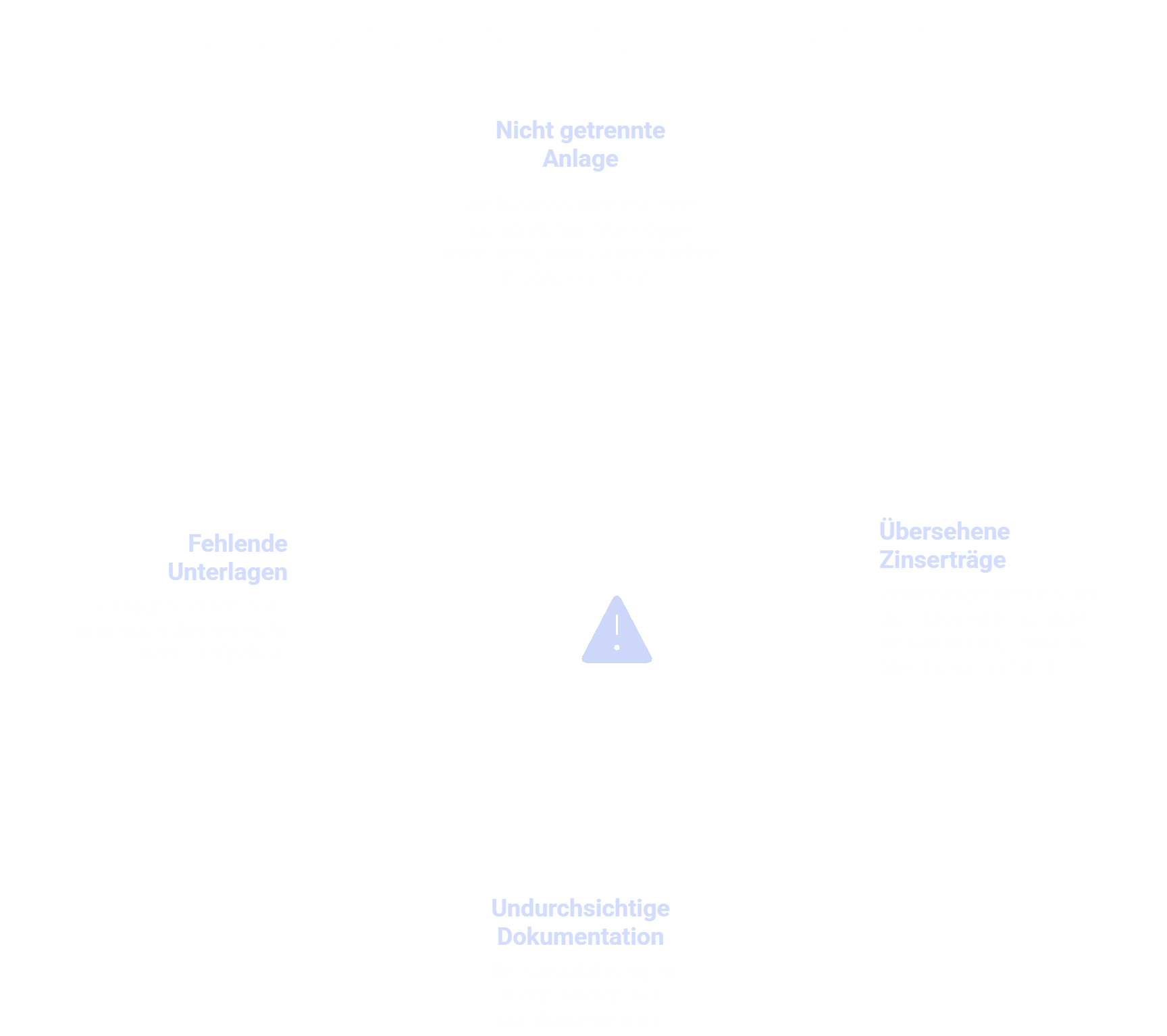
- The deposit is not kept separate from one's own assets.
- Interest yields are overlooked or not considered during repayment.
- Account management is not transparently documented for the tenant.
- Documents are missing or can no longer be found after years.
Such errors often seem harmless, but can still lead to refund claims or legal disputes long after moving out.

Are rental deposit accounts without interest allowed?
Yes. There is no minimum interest rate required by law for rental deposit accounts. The key factor is that the deposit is kept separate from the landlord's assets and invested under normal conditions.
Even if the interest rate is low or non-existent, the investment is permissible as long as it is transparent and does not disadvantage the tenant.
For landlords, this means one thing above all: the more transparent and comprehensible the deposit management is, the lower the risk of later conflicts.
Why a structured solution is worthwhile for private landlords
Many private landlords manage deposits on the side, often without fixed processes. This works as long as a tenancy ends and details suddenly become relevant. That's when it becomes clear how valuable clean and automated management is.
A solution like heykaution addresses precisely this point. The deposit is kept separate from private assets, interest is calculated automatically, and all relevant information is transparently documented at all times. This not only reduces administrative effort, but also the risk of misunderstandings or legal disputes.
Especially for landlords without property management, this is a pragmatic way to bring order to a topic that is often underestimated. For more information, visit
Your advantages as a private landlord
A correctly managed and interest-bearing rental deposit creates above all one thing: clarity. You know that you are on the legally safe side, your tenant knows that their money is being handled transparently and traceably. This reduces conflicts, simplifies repayment at the end of the tenancy, and removes unnecessary administrative burden from you.
Especially with multiple tenancies or longer rental periods, structured deposit management pays off because it minimizes sources of error and avoids discussions before they arise.

Conclusion: Legal security through proper deposit management
If you as a private landlord invest, pay interest on, and document the rental deposit correctly, you fulfill your legal obligations and avoid many typical points of contention. In the end, it's not the interest yield that matters, but whether the entire process was transparent and legally sound.
Digital solutions like heykaution can help make the process clear and reliable, especially if you work without property management and want to keep additional effort to a minimum.
Frequently Asked Questions About Interest on Rental Security Deposit Accounts

Published on 06 February 2026Last updated on 30 June 2026